Ohmflow Ultra: Rethinking Load Management for Residential and BTR

.jpg)
As EV charging becomes standard across residential buildings, load management is no longer a “nice to have”, it’s now a must have to meet code in all new buildings. It sits at the centre of reliability, resident experience and long-term operational success. As a specialist in EV charging for large buildings, it’s all we’ve done for the past few years, we’ve spent a lot of time looking at how load management systems are typically deployed, and more importantly, where they fall short.
Broadly speaking, the market has taken two very different paths.
At one end, most charger OEMs offer a basic, cloud-only load management solution. It’s relatively inexpensive and simple, but also limited. Performance is entirely dependent on internet connectivity, flexibility is minimal, interoperability is non-existent, and once you move beyond straightforward use cases, the cracks begin to show.
At the other end of the spectrum are highly complex on-site load management systems. These robust, but often extraordinarily expensive, complex to deploy and still no interoperability in sight. For most buildings, they are too complicated and represent an outdated way to deploy in-building technology.
Our view was that neither approach served buildings, and more importantly residents, particularly well.
That thinking led to the development of Ohmflow Ultra, our advanced load management system. From the beginning, the goal was to combine the strengths of both approaches without inheriting their weaknesses. Developing a solution tailored specifically to large scale residential and BTR developments. Ohmflow Ultra operates locally on-site, giving it the speed, resilience and reliability required for critical infrastructure, while remaining tightly connected to the cloud to support broader system intelligence and future use cases.
This hybrid approach matters more than it might seem. By operating locally, Ohmflow Ultra is protected against poor latency or temporary internet connectivity issues. Charging and load management continues to work predictably, safely and fairly, even when the internet is down. At the same time, cloud connectivity allows the system to offer state of the art user experience, adapt to changing demand profiles and evolve over time.
Crucially, Ohmflow Ultra is designed to integrate with many of the widely deployed energy management systems, rather than replacing them. Importantly, our hardware and software stack, also manages charging across all charging levels (1 smart GPOs, 2 rapid chargers, and Level 3 DC Fast chargers) to give building the ability to offer a charging solution tailored to the residents needs in one unified system. Finally, all this is built with vehicle-to-grid functionality firmly in mind as that capability becomes viable at scale in the future.
Just as important is what the system doesn’t do. It isn’t tied to a single charger manufacturer. Many load management platforms are designed primarily to sell more chargers, which limits choice and locks buildings into closed ecosystems. Ohmflow Ultra is deliberately charger-agnostic, integrating with a wide range of high-quality chargers so developers, owners and residents have genuine flexibility.
And because it’s fully integrated into the broader Ohmie GO platform, load management doesn’t exist in isolation. Billing, customer support, Ohmie GO resident app and on-site operations all sit within the same system. There’s no fragmentation, no finger-pointing between vendors and no need for building managers to juggle multiple platforms to keep things running.
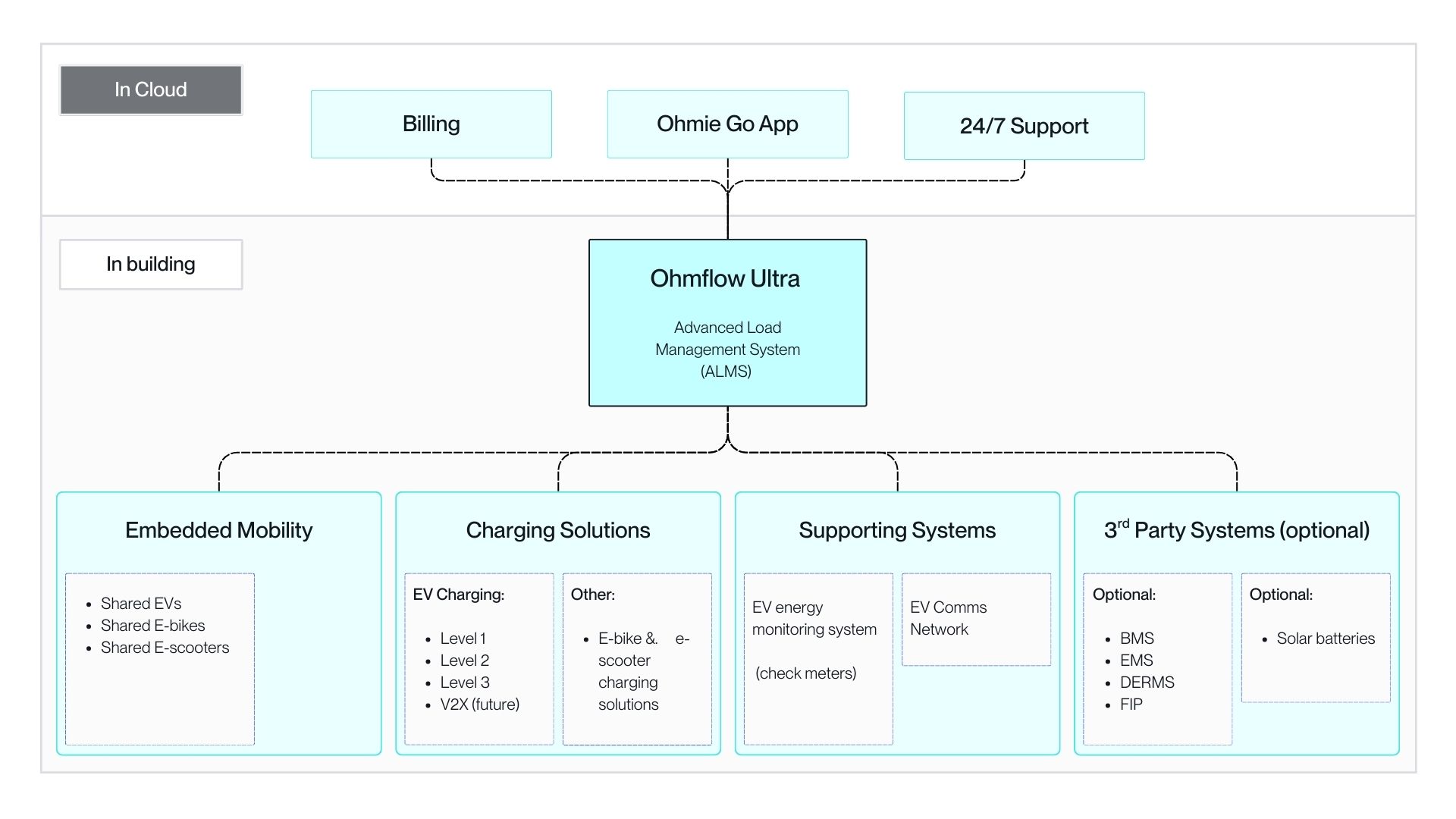
Once that foundation was in place, the next step was obvious. If you’re already managing energy, charging and access reliably, it makes sense to extend that capability across the wider emobility ecosystem. Ohmflow Ultra now underpins our shared EV fleets, e-bikes and charging infrastructure, bringing everything together in one place.
One provider. One system. One support team.
From an operational perspective, that simplicity makes a significant difference. Buildings are complex enough without layering additional systems and suppliers on top. When everything is integrated properly, it runs quietly in the background.
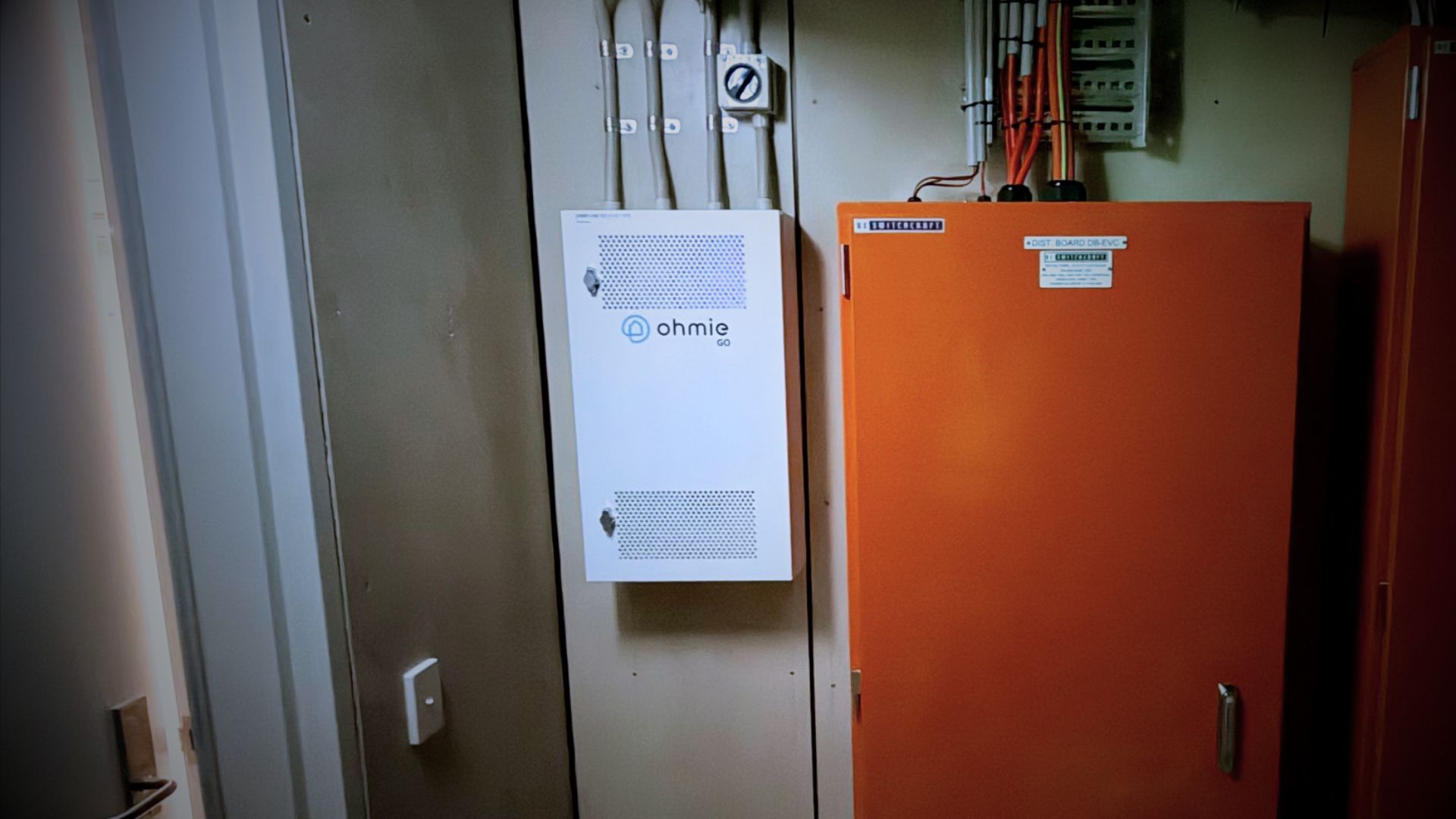
We’ll continue to share more about our recent Ohmflow Ultra deployments and how it’s supporting the next phase of electrified mobility in residential and BTR environments. As with everything we build, the focus isn’t on doing something flashy, but on doing it properly - and making sure it works long after handover.
ABOUT OHMIE GO
Ohmie GO is Australia’s first, and leading, electric mobility platform for buildings, which was founded in 2018. Ohmie GO is building the future of electric mobility and transport in partnership with Australia's most innovative and sustainable players in the property industry, changing the relationship between buildings and mobility.
Media contact: press@ohmiego.com
Build your Electric Mobility Hub
More Articles
As EV charging becomes standard across residential buildings, load management is no longer a “nice to have”, it’s now a must have to meet code in all new buildings. It sits at the centre of reliability, resident experience and long-term operational success. As a specialist in EV charging for large buildings, it’s all we’ve done for the past few years, we’ve spent a lot of time looking at how load management systems are typically deployed, and more importantly, where they fall short.
Broadly speaking, the market has taken two very different paths.
At one end, most charger OEMs offer a basic, cloud-only load management solution. It’s relatively inexpensive and simple, but also limited. Performance is entirely dependent on internet connectivity, flexibility is minimal, interoperability is non-existent, and once you move beyond straightforward use cases, the cracks begin to show.
At the other end of the spectrum are highly complex on-site load management systems. These robust, but often extraordinarily expensive, complex to deploy and still no interoperability in sight. For most buildings, they are too complicated and represent an outdated way to deploy in-building technology.
Our view was that neither approach served buildings, and more importantly residents, particularly well.
That thinking led to the development of Ohmflow Ultra, our advanced load management system. From the beginning, the goal was to combine the strengths of both approaches without inheriting their weaknesses. Developing a solution tailored specifically to large scale residential and BTR developments. Ohmflow Ultra operates locally on-site, giving it the speed, resilience and reliability required for critical infrastructure, while remaining tightly connected to the cloud to support broader system intelligence and future use cases.
This hybrid approach matters more than it might seem. By operating locally, Ohmflow Ultra is protected against poor latency or temporary internet connectivity issues. Charging and load management continues to work predictably, safely and fairly, even when the internet is down. At the same time, cloud connectivity allows the system to offer state of the art user experience, adapt to changing demand profiles and evolve over time.
Crucially, Ohmflow Ultra is designed to integrate with many of the widely deployed energy management systems, rather than replacing them. Importantly, our hardware and software stack, also manages charging across all charging levels (1 smart GPOs, 2 rapid chargers, and Level 3 DC Fast chargers) to give building the ability to offer a charging solution tailored to the residents needs in one unified system. Finally, all this is built with vehicle-to-grid functionality firmly in mind as that capability becomes viable at scale in the future.
Just as important is what the system doesn’t do. It isn’t tied to a single charger manufacturer. Many load management platforms are designed primarily to sell more chargers, which limits choice and locks buildings into closed ecosystems. Ohmflow Ultra is deliberately charger-agnostic, integrating with a wide range of high-quality chargers so developers, owners and residents have genuine flexibility.
And because it’s fully integrated into the broader Ohmie GO platform, load management doesn’t exist in isolation. Billing, customer support, Ohmie GO resident app and on-site operations all sit within the same system. There’s no fragmentation, no finger-pointing between vendors and no need for building managers to juggle multiple platforms to keep things running.
Once that foundation was in place, the next step was obvious. If you’re already managing energy, charging and access reliably, it makes sense to extend that capability across the wider emobility ecosystem. Ohmflow Ultra now underpins our shared EV fleets, e-bikes and charging infrastructure, bringing everything together in one place.
One provider. One system. One support team.
From an operational perspective, that simplicity makes a significant difference. Buildings are complex enough without layering additional systems and suppliers on top. When everything is integrated properly, it runs quietly in the background.
We’ll continue to share more about our recent Ohmflow Ultra deployments and how it’s supporting the next phase of electrified mobility in residential and BTR environments. As with everything we build, the focus isn’t on doing something flashy, but on doing it properly - and making sure it works long after handover.
ABOUT OHMIE GO
Ohmie GO is Australia’s first, and leading, electric mobility platform for buildings, which was founded in 2018. Ohmie GO is building the future of electric mobility and transport in partnership with Australia's most innovative and sustainable players in the property industry, changing the relationship between buildings and mobility.
Media contact: press@ohmiego.com

Ohmflow Ultra: Rethinking Load Management for Residential and BTR
The end of 2025 was a busy one for us, with deployments rolling out across a number of impressive residential developments around Australia. One project that stood out was Sekisui House Australia’s Allere Collection in South Brisbane, part of the broader West Village precinct.
West Village is an award-winning, mixed-use development and Allere sits right at the heart of it. The residential offering is strong - thoughtful amenities, a highly connected location and a clear focus on quality of life for residents. One of those amenities is a dedicated fleet of shared electric vehicles, and that’s where this project became particularly interesting for us.
For many of our larger projects, we’re now engaged during the design phase, not after construction is complete. E-mobility is no longer an afterthought. It directly influences basement layouts, infrastructure provision and the placement of services. Alongside shared EVs, we also deliver EV backbone infrastructure and charging solutions, so these decisions matter early.
During the early design stages for Allere, Sekisui House were clear about their intent. They wanted to appeal to sustainability-focused buyers. That flowed through everything from material selection and health and wellness facilities, to a deliberate decision to reduce the number of private car parks by providing access to Ohmie GO shared EVs instead.
We’ve worked through similar arrangements with councils before and no two are the same. Outcomes depend on how progressive the council is, as well as the location of the development itself. Proximity to public transport plays a big role. In this case, the approach worked. Ten of the most premium apartments were delivered without car parks, and buyers were comfortable with that decision knowing they had 24/7 access to a dedicated fleet of shared EVs within the West Village precinct.
Beyond individual projects, it’s been an interesting period for us operationally as well. Following the launch of the HOME BTR portfolio, utilisation across all sites took off from week one, hitting the same benchmarks we see across our best-performing locations. We were pleased, but more importantly, the on-site operations teams were surprised. Everything just worked. There were no issues to manage, no extra admin and no firefighting.
That difference comes down to the system underneath it all. Over the past nine years, we’ve focused heavily on deep integration and operational detail. Early on, we made the decision to build our technology entirely in-house, rather than relying on third-party software stitched together behind the scenes. At first glance, many solutions in the market look similar. The question we often heard was, “Why does it matter?”
Over time, it matters a lot. As systems scale and buildings move from delivery into long-term operations, gaps start to appear usually around reliability, support and operational complexity. Left unchecked, those issues compound, directly impacting the resident experience and, in turn, utilisation. In a building, word travels quickly and it’s hard to reverse a downward utilisation spiral once trust is lost. That’s exactly what we built Ohmie GO to avoid.
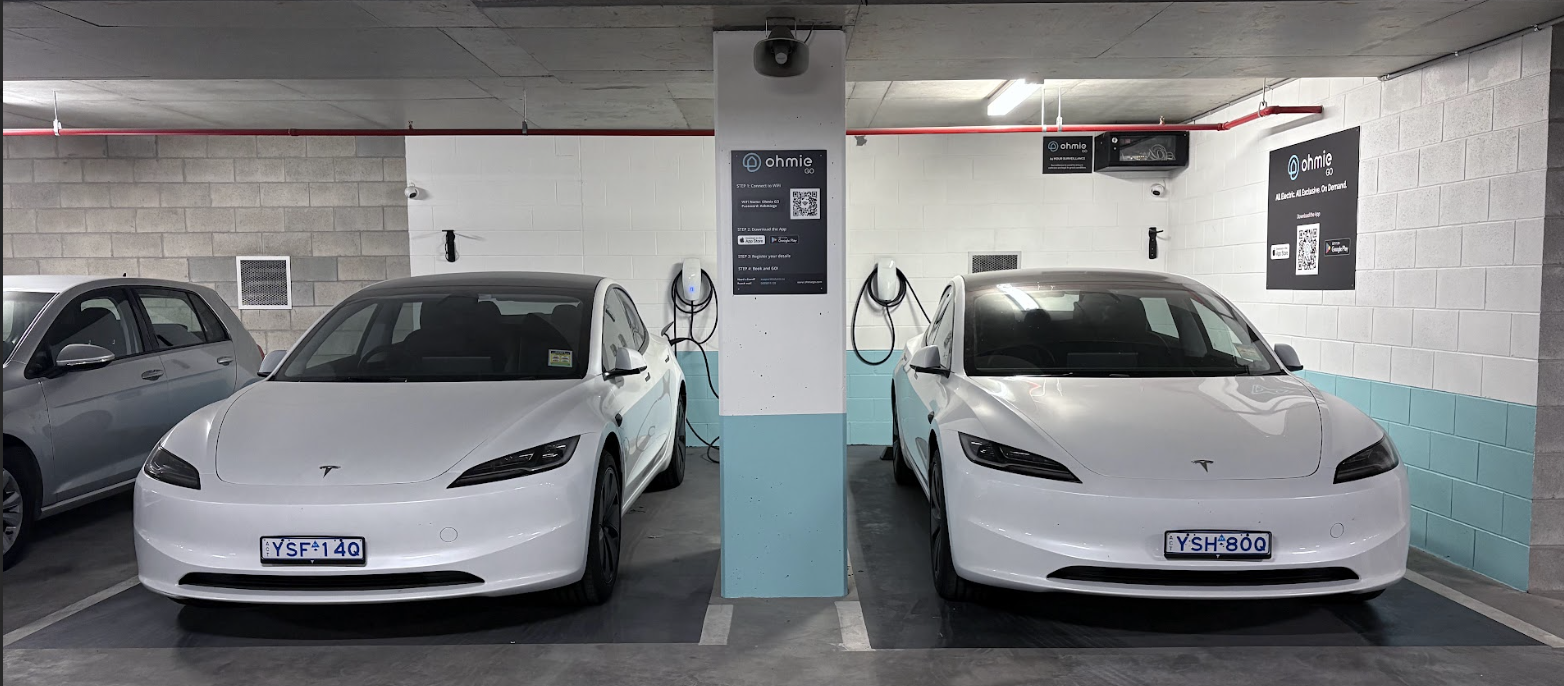
If you look at a typical deployment, like Allere in the photos above, you’ll see the visible components — the EV, the charger, cameras, communications hardware and clear signage. Many providers don’t even deploy dedicated communications hardware or cameras. What you don’t see is the technology layer underneath: the integrations that allow all of those components to talk to each other, automatically feed data back to our operating system and deliver a consistent experience for residents and site teams alike. When everything is connected properly, it runs quietly in the background, and that consistency is how reliability is built and how trust is earned.
We’ll continue to talk openly about the differences between Ohmie GO and other providers. The industry is still small, and over time we’re confident that attention to detail, operational maturity and the ability to quietly make things work will speak for itself.
We’ll be sharing more updates over the coming weeks such as new sites, small wins along the way and some exciting product launches that are already live across our first projects.
ABOUT OHMIE GO
Ohmie GO is Australia’s first, and leading, electric mobility platform for buildings, which was founded in 2018. Ohmie GO is building the future of electric mobility and transport in partnership with Australia's most innovative and sustainable players in the property industry, changing the relationship between buildings and mobility.
Media contact: press@ohmiego.com

Sekisui House offers shared EVs and internal operating systems equals utilisation
Australia’s Build to Rent sector is moving quickly and expectations around how these buildings perform day to day are rising just as fast. The infrastructure installed during development has to keep working once a building moves from delivery to operations. If it doesn’t, the operations team is the one who ends up dealing with the fallout.
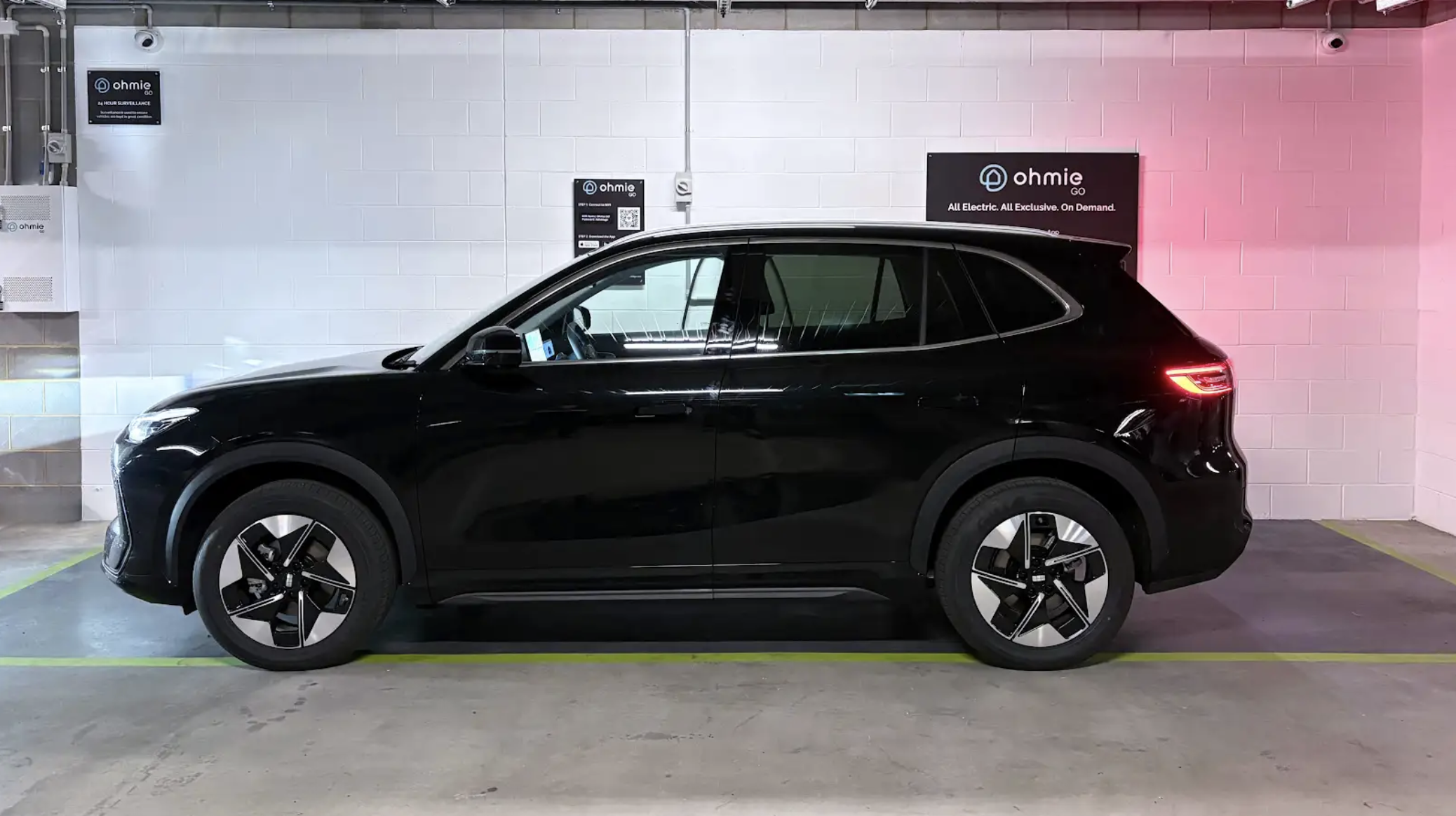
We’ve now deployed shared electric vehicles across all of HOME’s BTR communities in Richmond, Southbank, Docklands and Parramatta. This partnership is a special one for us. We've had a relationship with the HOME team since 2022 when they launched their first building. We shared our vision, what we were building and what we wanted to deliver together. It wasn’t the right timing then, but we said we'd stay in touch. We did, and it’s great to now be rolling out a consistent resident experience across their entire BTR portfolio. Their fleet includes Tesla Model 3, Tesla Model Y, BYD Dolphin and Geely EX5, all fully integrated with the Ohmie GO backend so our team can monitor performance, respond quickly to support requests and keep everything running smoothly.
HOME were clear about what they wanted. They needed a solution that worked quietly in the background without adding admin and another thing to manage for their already busy operations and site team. With Ohmie GO, they don’t manage anything. We handle the full stack for them including maintenance, cleaning, insurance, 24/7 support, resident verification, billing, operations and ongoing system management. All they receive is a clean monthly report so they can track utilisation and plan for future expansion, whether that is more shared EVs, shared e-bikes, EV charging or e-bike charging.
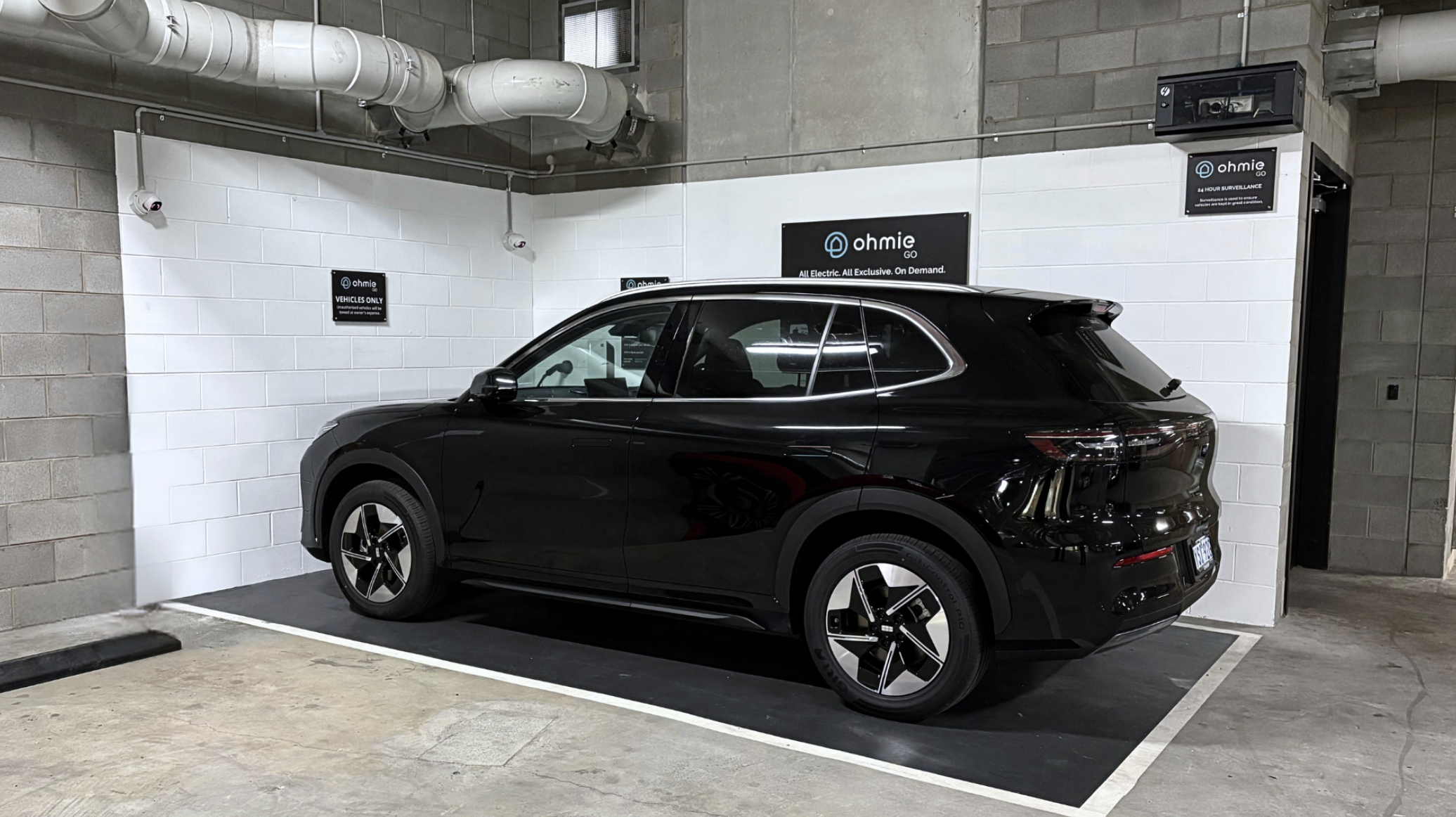
A lot of solutions in the market look end-to-end and integrated on the surface, but in reality rely on multiple vendors stitched together. That might work on day one, but it usually leads to long term risk and operational headaches. We built Ohmie GO to avoid that entirely. It is a fully turnkey platform designed specifically for large residential buildings and something we’re genuinely proud of. We’ll be sharing more detail around this over the coming months, but our positioning is resonating well with premium residential and BTR developers, typically the ones who really care about the end outcomes of their residents. We’re also proud to be partnering with a company like HOME who share the same mindset and values around resident experience and long term building performance.
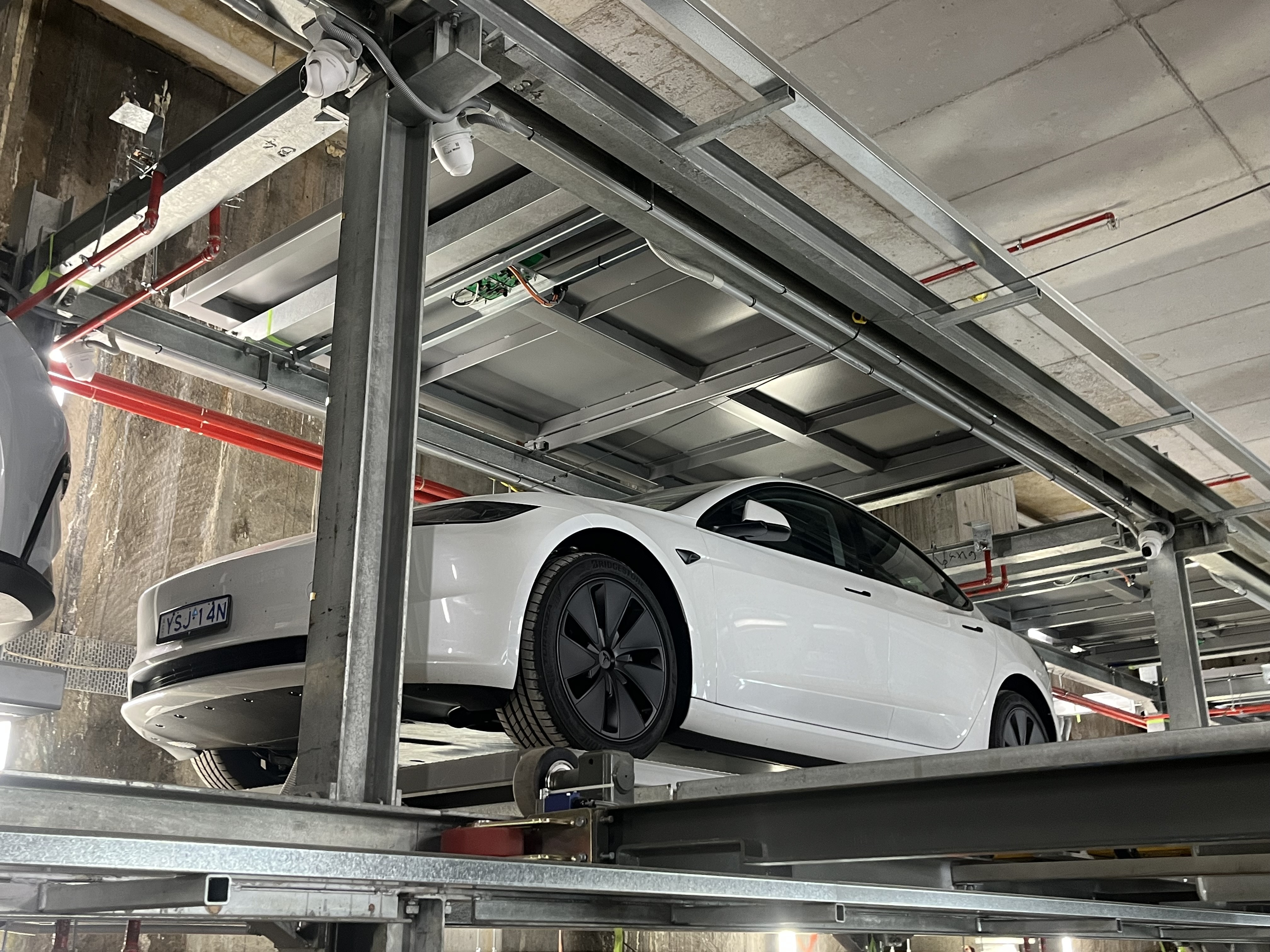
What made our partnership even more exciting was the integration with two different car stacker models across the portfolio. This is the first shared EV and car stacker integration in Australia. We always say the devil is in the details and that proved true here. Making the resident experience feel simple requires a lot of work behind the scenes. Adding in a car stacker flow means you’ve got to have the right team and capabilities to deliver. Kyle, our founder, often calls the result the "EV vending machine". The stackers are integrated with charging and the ability to call the car directly from the car stacker with the Ohmie GO app. It is a very clean, future proof setup that we will continue rolling out across new projects.
We're looking forward to working with HOME as their e-mobility partner to bring the best solution to your residents.
ABOUT OHMIE GO
Ohmie GO is Australia’s first, and leading, electric mobility platform for buildings, which was founded in 2018. Ohmie GO is building the future of electric mobility and transport in partnership with Australia's most innovative and sustainable players in the property industry, changing the relationship between buildings and mobility.
Media contact: press@ohmiego.com
.png)